Order on the shop floor: 5 practical tips for working smarter

Custom-made foam inlay by De Kemphaan for order on the shop floor with clearly visible cutouts for tools.

An organized workplace is not just tidy, but also smarter. Order on the shop floor increases efficiency, limits errors, and reduces the risk of accidents. Yet, it often remains a matter of good intentions. How do you ensure lasting structure?

Below, we share 5 practical tips that you can apply today – including a handy solution for those who want to store tools or parts neatly.

1. Give everything a fixed place

It seems obvious, but it is often forgotten in practice. Everything you use – from hand tools to safety glasses or screws – must have a fixed, logical location.

For example, use labeled bins, wall racks, or pull-out drawers with a clear layout. This prevents searching, duplicate use, and chaos at the end of the workday.

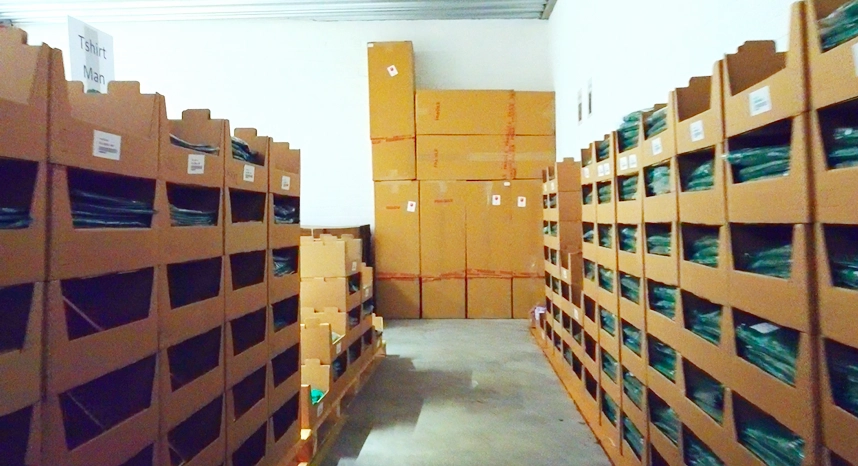
Structured storage and shipping of corporate clothing and onboarding packages via Com'ma with labeled cardboard sorting bins.
Organized storage of corporate clothing in labeled sorting bins. This ensures the shipping process from Com'ma runs efficiently and error-free.

2. Work with visual support

A visual workplace makes it clear more quickly what belongs where. Consider:

    • Shadow boards: a board on which the outline of the tool is visible.

    • Color coding: work zones or types of material are each assigned their own color.

    • Instruction boards: featuring short pictograms or step-by-step procedures.

    • Inlay sheets: custom-cut layers that keep parts separated, protected, and visually numbered during internal transport between production steps.

This increases the readability of your workplace – especially useful in shift work or when multiple people use the same zone.

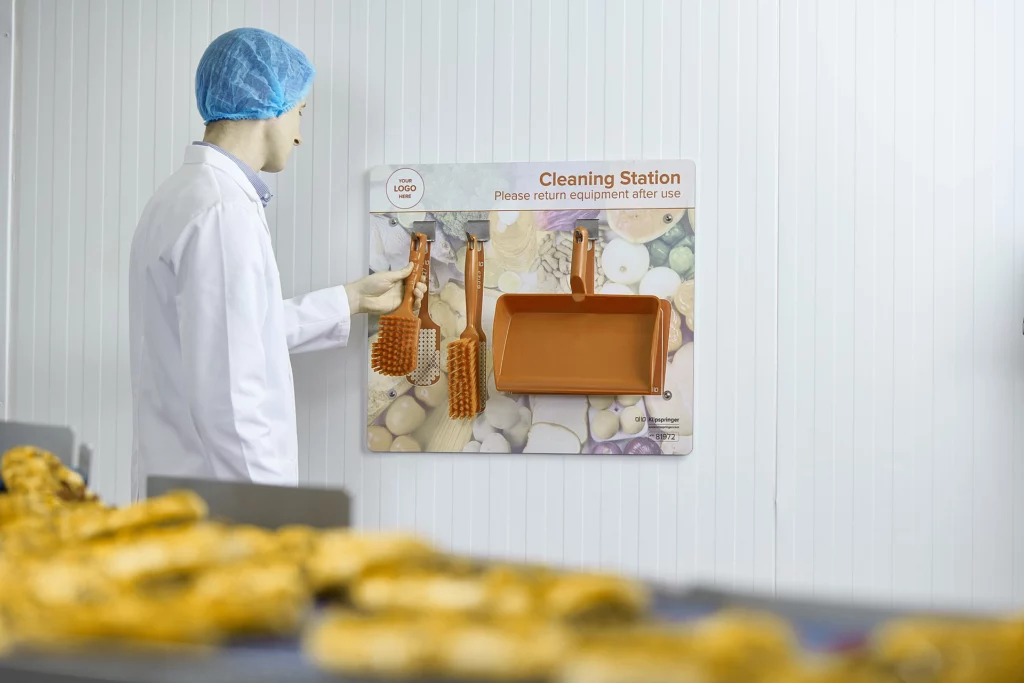
Shadow board with brush and dustpan as a cleaning station for visual order and hygiene on the shop floor.
A simple shadow board like this cleaning station immediately shows what is missing. Order and hygiene on the shop floor at a single glance.

3. Choose smart storage systems

Ensure that tools and materials are not just lying loose in a drawer. Consider:

  • organizer bins,

  • pull-out drawers,

  • or sturdy cases with fixed compartments.

A smart storage system makes it easier to work in a structured manner and prevents damage to tools.

Furthermore, using contrasting colors in drawers or cases can help you quickly see what is missing.

4. Eliminate unnecessary items

An often forgotten step in maintaining order: discarding what you do not use.
Regularly check which materials, tools, or parts are no longer relevant. By working with clear limits (e.g., per cabinet or zone), you prevent accumulation and clutter.

What you do not need is a distraction. What you do need must be immediately findable.

5. Consider customization for specific applications

Standard solutions do not always work for specific workstations. In such cases, a customized approach is more effective. Consider:

  • Custom-cut foam inlays in which every tool or piece of safety equipment fits perfectly, remains durably protected, and is always in its place.

  • Sample boxes or demo cases for professional and organized transport of presentation materials.

  • Laser-cut or die-cut shapes for shadow boards, workstations, or mobile setups. Effective structure, even with rotating staff or mobile applications.

Custom-made foam inlay for workplace organization with clearly visible tool cutouts.
Custom-made foam inlay for workplace organization with numbering and convenient tool cutouts.

Taking it a step further?

An organized workplace also aligns with sustainable and thoughtful material use. In our previous article about the waste island, you can read how a structured approach also makes waste streams clearer – and helps limit waste.

More news