The world of packaging is constantly evolving. While traditional packaging has been designed for single use for years, the focus is increasingly shifting toward circular solutions that preserve value, reduce waste, and contribute to a sustainable future.
Looking ahead to 2026, we see three striking trends that will make a difference: sustainable materials, reusable systems, and digital integration.


At De Kemphaan, we see these developments in practice every day, including in our collaboration with Return2Sender, an innovative company that develops sustainable, reusable B2B packaging solutions. For Return2Sender, we handle the confection of their pallet wraps, which are not only functional but also truly contribute to circularity.
1. Sustainable materials
The transition to packaging based on renewable raw materials is in full swing. Fossil-based plastic is increasingly being replaced by plant-based alternatives, such as fibers from seaweed, corn, or mushrooms. We are also seeing a strong rise in mono-materials: packaging consisting of a single material type, making it easier to recycle. Additionally, there is growing demand for compostable and biodegradable packaging, which leaves no waste problem behind after use.
Return2Sender responds cleverly to this by developing packaging that considers reuse, repair, and repurposing from the design stage. As a result, materials remain in the circular chain longer and waste is minimized.
The plastic problem
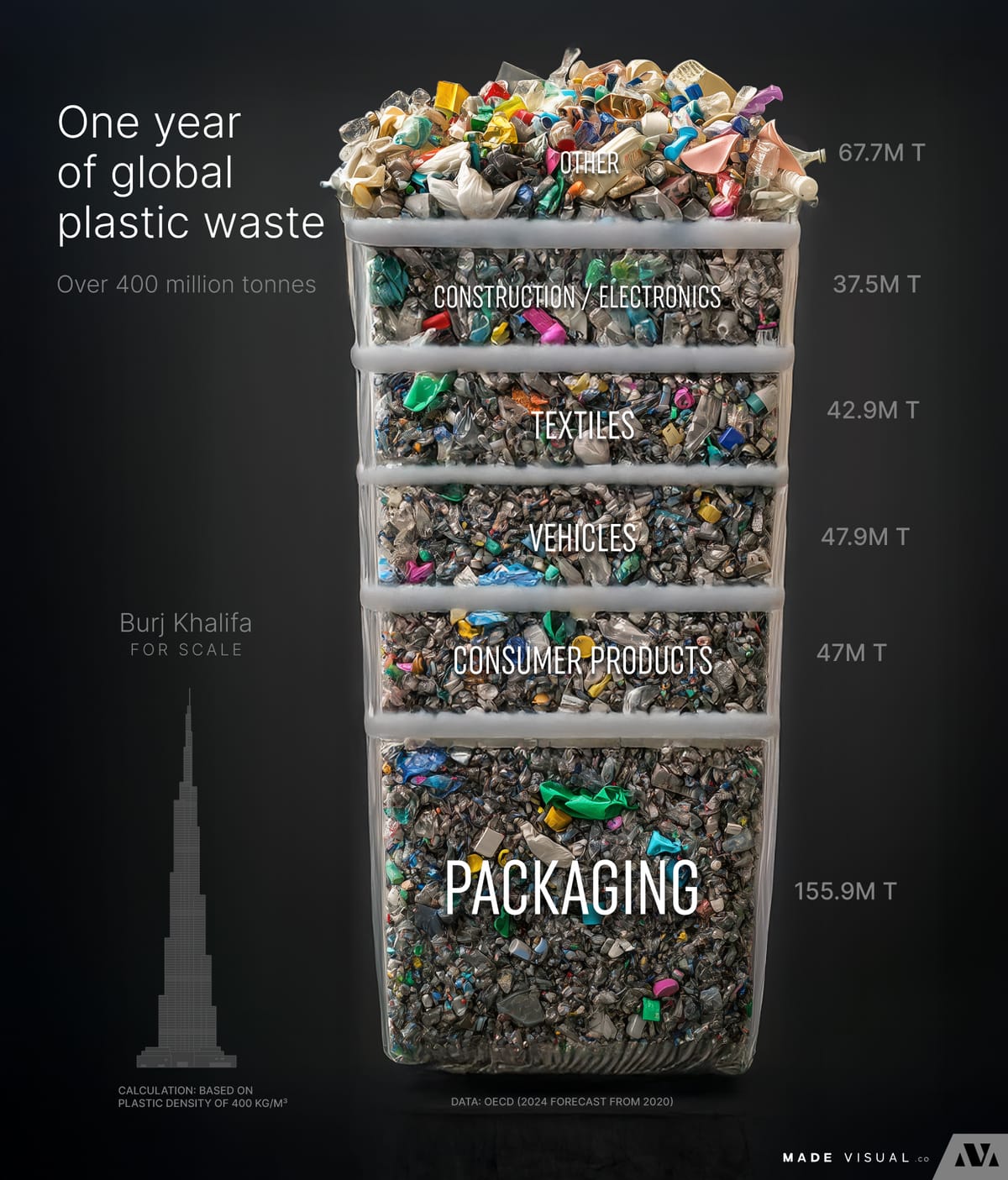
According to a report by the OECD, more than 400 million tons of plastic waste was predicted for 2024.
Plastic is cheap and versatile, but it hardly decomposes. It pollutes ecosystems, accumulates in our living environment, and poses a growing challenge for future generations.
At De Kemphaan, we therefore focus on sustainable alternatives and circular solutions. Based on our operations surrounding the Sustainable Development Goals (SDGs), we contribute every day to a future where materials are reused and where production processes benefit people, the environment, and society.
2. Reusable and refillable systems
While recycling was the keyword for a long time, attention is now shifting to reuse and refilling. This aligns closely with the principles of the circular economy. Companies and consumers are becoming accustomed to packaging that can be used multiple times, from B2B shipping crates to consumer packaging that can be easily returned or refilled.
Return2Sender’s packaging is a perfect example of this. Their robust, EUMOS 40509-certified systems are designed for numerous reuse cycles and prove that sustainability and economic efficiency go hand in hand. This makes reusable packaging increasingly attractive for companies looking to save costs and reduce their ecological footprint.
3. Digital integration
Digitization is changing not only products but also packaging. Smart packaging with QR codes and interactive elements provides consumers with insight into the origin and sustainability of a product and makes recycling easier by offering clear sorting instructions.
Additionally, we see the rise of Digital Product Passports (DPPs), which make the entire lifecycle of packaging transparent, from materials and production methods to reuse and recycling.
At Return2Sender, digital tracking plays a crucial role in their “packaging as a service” business model. Thanks to smart technologies, packaging can be accurately tracked, which facilitates reuse and preserves value in the logistics chain.
CONCLUSION
The circular packaging world is developing rapidly. While sustainable materials provide a green foundation, reusable systems make circular logistics practically feasible, and digital integration takes the sector to an even higher level of transparency and efficiency. At De Kemphaan, we are proud of our role in this transition, not just as an observer, but as an active partner.
Together with clients such as Return2Sender and Duomed, we are building solutions that comply with the latest regulations, are good for the planet, and are smart for the economy.
Would you like to know more about our confection solutions or how we can tackle your packaging challenge?
Please feel free to contact us; we would be happy to think along with you.